SQL Functions That Exist on Some Engines Only and What to Write Instead
IFNULL, NOW, LEFT and STRING_AGG are everyday functions, and each one is missing on at least one of SQLite, PostgreSQL, MySQL and MariaDB. BareSQL Portable knows 78 functions like these.
Each function in the table was called on all four engines, and the table shows where the call ran and what to write instead.
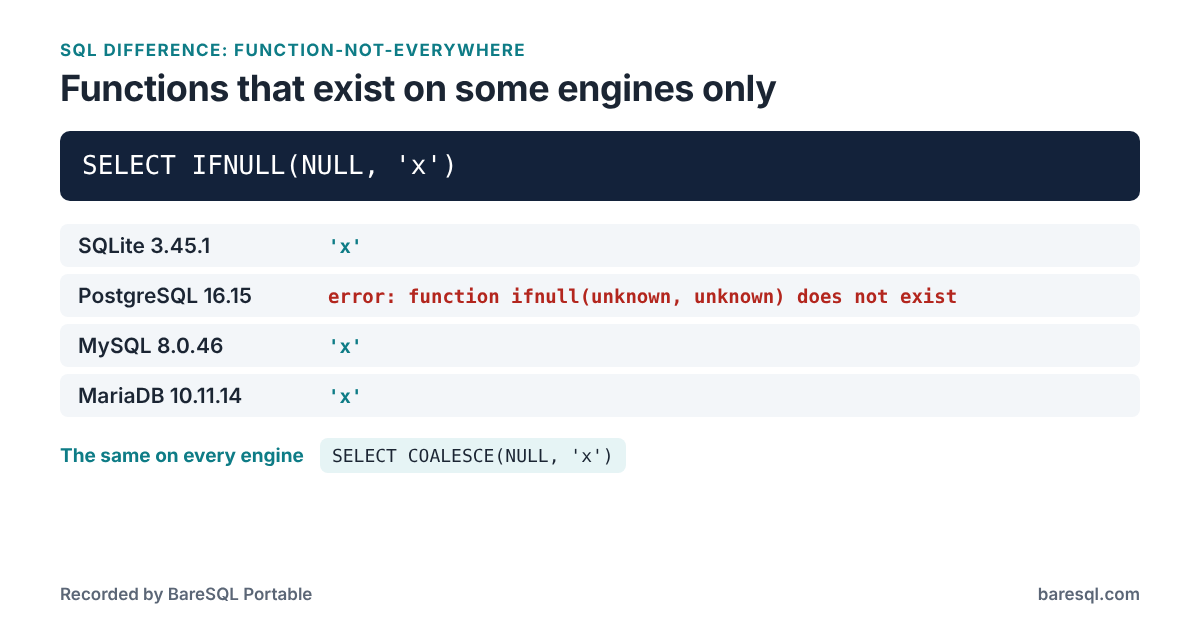
What Each Engine Answered
The example
SELECT IFNULL(NULL, 'x');
gave these answers:
| Engine | Answer |
|---|---|
| SQLite 3.45.1 | 'x' |
| PostgreSQL 16.15 | error: function ifnull(unknown, unknown) does not exist |
| MySQL 8.0.46 | 'x' |
| MariaDB 10.11.14 | 'x' |
Every Form BareSQL Checks
BareSQL Portable checks 78 forms of this, and each was run on all four engines. yes means the engine ran it and the engines that ran it agreed, no means the engine refused it, and a value is what the engine answered where they disagreed.
| Form | SQLite | PostgreSQL | MySQL | MariaDB | What to write instead |
|---|---|---|---|---|---|
IFNULL |
yes | no | yes | yes | Use COALESCE(a, b). |
NVL |
no | no | no | yes | Use COALESCE(a, b). |
IF |
no | no | yes | yes | Use CASE WHEN c THEN a ELSE b END. The SQLite answer holds before 3.48. |
IIF |
yes | no | no | no | Use CASE WHEN c THEN a ELSE b END. |
ISNULL |
no | no | yes | yes | Use x IS NULL. |
NOW |
no | yes | yes | yes | Use CURRENT_TIMESTAMP. |
CURDATE |
no | no | yes | yes | Use CURRENT_DATE. |
CURTIME |
no | no | yes | yes | Use CURRENT_TIME. |
SYSDATE |
no | no | yes | yes | Use CURRENT_TIMESTAMP. |
LEFT |
no | yes | yes | yes | Use SUBSTR(x, 1, n). |
RIGHT |
no | yes | yes | yes | No form works on all four engines; SUBSTR(x, LENGTH(x) - n + 1) works for ASCII text. |
CHAR_LENGTH |
no | yes | yes | yes | No form works on all four engines; LENGTH counts characters on SQLite (see LENGTH counts bytes on MySQL). |
CHARACTER_LENGTH |
no | yes | yes | yes | No form works on all four engines; LENGTH counts characters on SQLite (see LENGTH counts bytes on MySQL). |
POSITION |
no | yes | yes | yes | No form works on all four engines; INSTR(s, x) on SQLite, MySQL and MariaDB. |
STRPOS |
no | yes | no | no | No form works on all four engines; INSTR(s, x) on SQLite, MySQL and MariaDB. |
LOCATE |
no | no | yes | yes | No form works on all four engines; INSTR(s, x) on SQLite, MySQL and MariaDB, POSITION(x IN s) on PostgreSQL. |
INSTR |
yes | no | yes | yes | No form works on all four engines; POSITION(x IN s) on PostgreSQL. |
LPAD |
no | yes | yes | yes | No form works on all four engines; pad in the application, or with printf() on SQLite. |
RPAD |
no | yes | yes | yes | No form works on all four engines; pad in the application, or with printf() on SQLite. |
REPEAT |
no | yes | yes | yes | No form works on all four engines; build the text in the application. |
REVERSE |
no | yes | yes | yes | No form works on all four engines; reverse the text in the application. |
SPACE |
no | no | yes | yes | Write the spaces as a literal. |
SUBSTRING_INDEX |
no | no | yes | yes | No form works on all four engines; split the text in the application. |
SPLIT_PART |
no | yes | no | no | No form works on all four engines; split the text in the application. |
INITCAP |
no | yes | no | no | Change the case in the application. |
TRANSLATE |
no | yes | no | no | Use one REPLACE per character. |
STRING_AGG |
yes | yes | no | no | No form works on all four engines; GROUP_CONCAT(x) on SQLite, MySQL and MariaDB. The SQLite answer holds from 3.44. |
GROUP_CONCAT |
yes | no | yes | yes | No form works on all four engines; STRING_AGG(x, ',') on PostgreSQL. |
ARRAY_AGG |
no | yes | no | no | No form works on all four engines; GROUP_CONCAT on SQLite, MySQL and MariaDB. |
RAND |
no | no | yes | yes | No form works on all four engines; RANDOM() on SQLite and PostgreSQL. |
RANDOM |
yes | yes | no | no | No form works on all four engines; RAND() on MySQL and MariaDB. |
TRUNC |
yes | yes | no | no | No form works on all four engines; TRUNCATE(x, 0) on MySQL and MariaDB. MariaDB’s own TRUNC, from 12.2, truncates dates and answers NULL for a number. The SQLite answer holds with math functions. The MariaDB answer holds before 12.2. |
TRUNCATE |
no | no | yes | yes | No form works on all four engines; TRUNC(x, d) on PostgreSQL; ROUND(x, d) rounds on all four. |
DATE_FORMAT |
no | no | yes | yes | No form works on all four engines; strftime() on SQLite and TO_CHAR() on PostgreSQL, or format dates in the application. |
TO_CHAR |
no | yes | no | yes | No form works on all four engines; strftime() on SQLite and DATE_FORMAT() on MySQL, or format dates in the application. |
STRFTIME |
yes | no | no | no | No form works on all four engines; TO_CHAR() on PostgreSQL and DATE_FORMAT() on MySQL and MariaDB. |
DATE_ADD |
no | no | yes | yes | No form works on all four engines; d + INTERVAL '1' DAY on PostgreSQL, MySQL and MariaDB, date(d, '+1 day') on SQLite. |
DATE_SUB |
no | no | yes | yes | No form works on all four engines; d - INTERVAL '1' DAY on PostgreSQL, MySQL and MariaDB, date(d, '-1 day') on SQLite. |
DATEDIFF |
no | no | yes | yes | No form works on all four engines; julianday(a) - julianday(b) on SQLite, a - b on PostgreSQL. |
TIMESTAMPDIFF |
no | no | yes | yes | No form works on all four engines; julianday() on SQLite, date subtraction on PostgreSQL. |
EXTRACT |
no | yes | yes | yes | No form works on all four engines; strftime('%Y', d) on SQLite. |
DATE_PART |
no | yes | no | no | Use EXTRACT on PostgreSQL, MySQL and MariaDB. |
DATE_TRUNC |
no | yes | no | no | No form works on all four engines; truncate dates in the application. |
JULIANDAY |
yes | no | no | no | No form works on all four engines; it exists on SQLite only. |
DATE(x, modifier) |
yes | no | no | no | No form works on all four engines; d + INTERVAL '1' DAY on PostgreSQL, MySQL and MariaDB. |
DATETIME |
yes | no | no | no | No form works on all four engines; CAST(x AS TIMESTAMP) on PostgreSQL and CAST(x AS DATETIME) on MySQL and MariaDB. |
UNIX_TIMESTAMP |
no | no | yes | yes | No form works on all four engines; unixepoch() on SQLite, EXTRACT(EPOCH FROM t) on PostgreSQL. |
UNIXEPOCH |
yes | no | no | no | No form works on all four engines; UNIX_TIMESTAMP() on MySQL and MariaDB, EXTRACT(EPOCH FROM t) on PostgreSQL. |
FROM_UNIXTIME |
no | no | yes | yes | No form works on all four engines; TO_TIMESTAMP() on PostgreSQL, datetime(n, 'unixepoch') on SQLite. |
TO_TIMESTAMP |
no | yes | no | no | No form works on all four engines; FROM_UNIXTIME() on MySQL and MariaDB, datetime(n, 'unixepoch') on SQLite. |
STR_TO_DATE |
no | no | yes | yes | Keep dates as ISO text (YYYY-MM-DD) and use DATE(x). |
TO_DATE |
no | yes | no | no | Keep dates as ISO text (YYYY-MM-DD) and use DATE(x). The MariaDB answer holds before 12.3. |
YEAR |
no | no | yes | yes | No form works on all four engines; EXTRACT(YEAR FROM d) on PostgreSQL, MySQL and MariaDB, strftime('%Y', d) on SQLite. |
MONTH |
no | no | yes | yes | No form works on all four engines; EXTRACT(MONTH FROM d) on PostgreSQL, MySQL and MariaDB, strftime('%m', d) on SQLite. |
DAY |
no | no | yes | yes | No form works on all four engines; EXTRACT(DAY FROM d) on PostgreSQL, MySQL and MariaDB, strftime('%d', d) on SQLite. |
DAYOFWEEK |
no | no | yes | yes | No form works on all four engines; EXTRACT(DOW FROM d) on PostgreSQL, strftime('%w', d) on SQLite. |
LAST_INSERT_ID |
no | no | yes | yes | Read the new id through the driver. |
LAST_INSERT_ROWID |
yes | no | no | no | Read the new id through the driver. |
REGEXP_REPLACE |
no | yes | yes | yes | No form works on all four engines; SQLite has no regular expression replace. |
REGEXP_LIKE |
no | yes | yes | no | No form works on all four engines; REGEXP on SQLite’s shell, MySQL and MariaDB, ~ on PostgreSQL. The PostgreSQL answer holds from 15. |
MD5 |
no | yes | yes | yes | Hash in the application. MySQL 9.6 moved MD5 into its optional legacy hashing component. The MySQL answer holds before 9.6. |
SHA2 |
no | no | yes | yes | Hash in the application. |
UUID |
no | no | yes | yes | Generate ids in the application. |
GEN_RANDOM_UUID |
no | yes | no | no | Generate ids in the application. |
HEX |
yes | no | yes | yes | No form works on all four engines; encode(x, 'hex') on PostgreSQL. |
UNHEX |
yes | no | yes | yes | No form works on all four engines; decode(x, 'hex') on PostgreSQL. |
CHR |
no | yes | no | yes | No form works on all four engines; CHAR(n) on SQLite and MySQL, where MySQL returns bytes. |
ASCII |
no | yes | yes | yes | No form works on all four engines; unicode() on SQLite. |
UNICODE |
yes | no | no | no | No form works on all four engines; ASCII() on PostgreSQL, MySQL and MariaDB. |
TYPEOF |
yes | no | no | no | No form works on all four engines; it exists on SQLite only. |
JSON_EXTRACT |
1 |
no | '1' |
'1' |
No form works on all four engines; PostgreSQL has the -> and ->> operators instead. |
STDDEV |
no | yes | yes | yes | No form works on all four engines; compute it from SUM and COUNT, or in the application. |
VARIANCE |
no | yes | yes | yes | No form works on all four engines; compute it from SUM and COUNT, or in the application. |
BOOL_AND |
no | yes | no | no | Use MIN(CASE WHEN x THEN 1 ELSE 0 END) = 1. |
EVERY |
no | yes | no | no | Use MIN(CASE WHEN x THEN 1 ELSE 0 END) = 1. |
BIT_AND |
no | yes | yes | yes | No form works on all four engines; SQLite has no bitwise aggregates. |
CONVERT |
no | no | yes | yes | Use CAST (see CAST to an integer or a decimal and CAST to text). |
TOTAL |
yes | no | no | no | Use COALESCE(SUM(x), 0). |
What to Write Instead
This form answers the same on every engine:
SELECT COALESCE(NULL, 'x');
| Engine | Answer |
|---|---|
| SQLite 3.45.1 | 'x' |
| PostgreSQL 16.15 | 'x' |
| MySQL 8.0.46 | 'x' |
| MariaDB 10.11.14 | 'x' |
Prefer the functions all four engines have: COALESCE, NULLIF, CASE, SUBSTR, REPLACE, TRIM, UPPER, LOWER, ABS, ROUND, and CONCAT (SQLite from 3.44).
What BareSQL Portable Reports
Saved as example.sql, the example gets this from baresql lint --all:
$ baresql lint --all example.sql
example.sql:1:8: error: IFNULL() works on SQLite, MySQL and MariaDB; PostgreSQL refuses it. [function-not-everywhere]
    IFNULL(NULL, 'x')
    Use COALESCE(a, b).

1 problem: 1 error.
baresql rules function-not-everywhere prints the same answers in the terminal, and the BareSQL Portable page lists every difference BareSQL knows.